Solar power is gaining popularity as a sustainable energy source and solar power plants are currently being established all over the world.
However, effective operation and maintenance (O&M) are essential to ensuring that these plants work efficiently and sustainably.
In this post, we’ll go over the most essential aspects of the solar plant (O&M) operation and maintenance.
Routine operation and maintenance (O&M) of a photovoltaic (PV) plant provides high system efficiency, reduces downtime and increases equipment life.
Regular inspections along with performance tracking cut operational expenses while ensuring optimal energy yield.
Why Solar O&M is important?
Solar O&M is an important aspect of ensuring that the solar power plant operates smoothly and efficiently.
Solar O&M may include a wide range of services such as
- Performance monitoring,
- Energy forecasting,
- Warranty administration and
- Preventative maintenance.
In this post, we will look at the important aspect of Solar O&M and why it is essential.
Maintenance feature of solar panel systems like any other type of expenditure it require regular maintenance to perform correctly.
Solar O&M ensures that your solar panel system is performing at peak levels and that any possible issues are identified early on before they cause serious damage.
In addition to maintaining the solar power system, solar O&M can assist you minimize the risks that come with owning one.
Solar panel systems are vulnerable to a variety of hazards which include weather damage, equipment failures & unexpected downtime.
Solar O&M can assist to reduce these risks & protect your panels from external factors.
The most significant advantages of Solar O&M is that it may assist in lay the groundwork for future operations that require less maintenance.
By investing in good care and maintenance it help to extend the life of the solar power system as well as prevent costly repairs in the future.
Solar O&M is an important aspect of having a solar panel system.
Investing in Solar Operations and Maintenance can assist to
- Risk mitigation,
- Improve performance and
- Extend the lifespan of the installation of solar panels.
Visual Inspection: Daily/Weekly
Visual inspections serve as the first line of protection against probable PV system failure.
These periodic tests detect early indicators of wear, corrosion (or) electrical issues.
Key Functions:
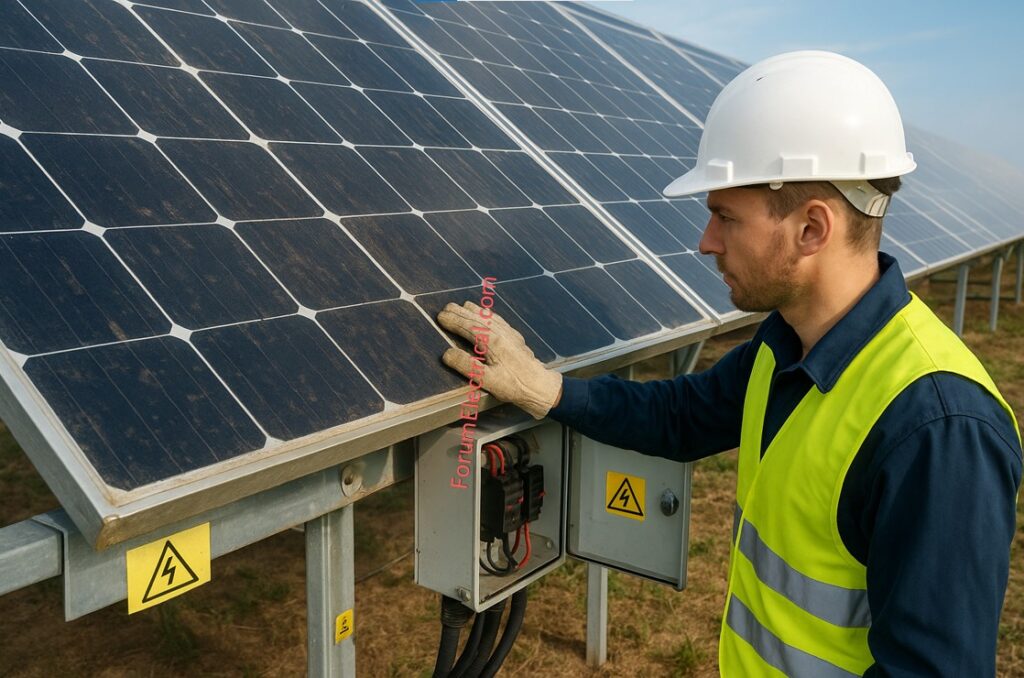
Inspect PV modules for cracks, delamination and dirt accumulation.
Look for rust or discoloration at the cable junctions and terminals.
Check string fuses, connectors & junction boxes for overheating (or) water penetration.
Ensure that the module mounting structures are strong and corrosion-free.
Ensure that all warning labels, earthing and signs are intact.
Inverter Equipment Maintenance
The inverter is the heart of a photovoltaic system converting DC to AC power.
Routine inverter maintenance assures continuous functioning and excellent conversion efficiency.
Key Functions:
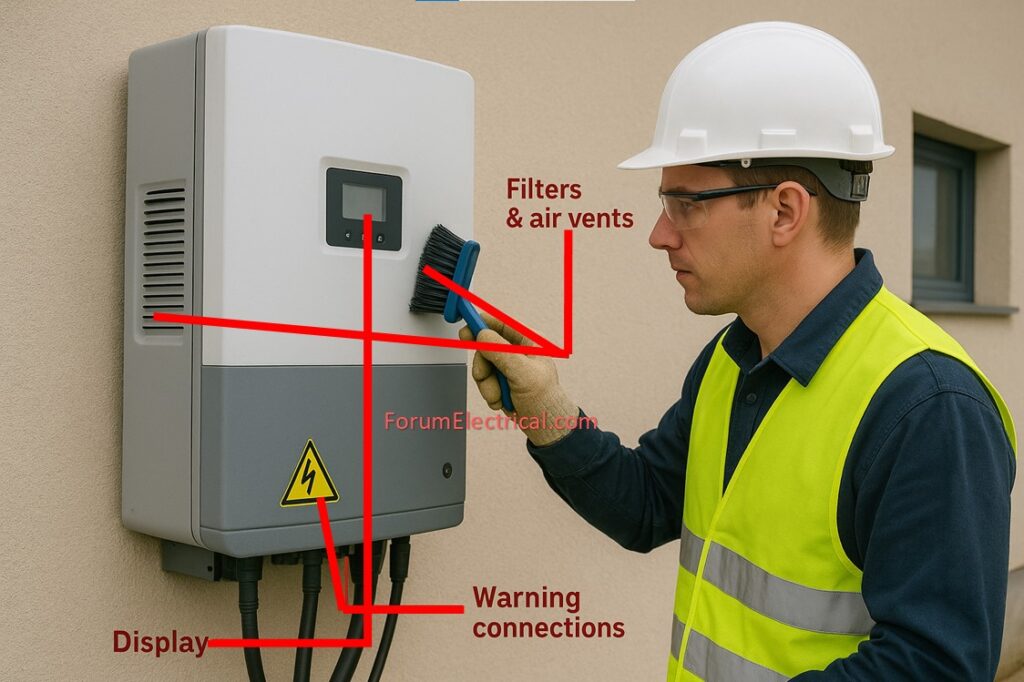
Clean the inverter filters & air vents to ensure optimal cooling.
Inspect the inverter display records for trouble codes, alerts (or) performance issues.
Measure the voltage, current & power factor at the input and output.
Inspect the DC & AC terminal connections for the tightness.
Follow OEM recommendations while updating inverter firmware.
Inspect DC link capacitors & fans for wear (or) malfunction.
Isolation Procedure: Field Combiner Box
Before performing any field maintenance you must ensure safe isolation.
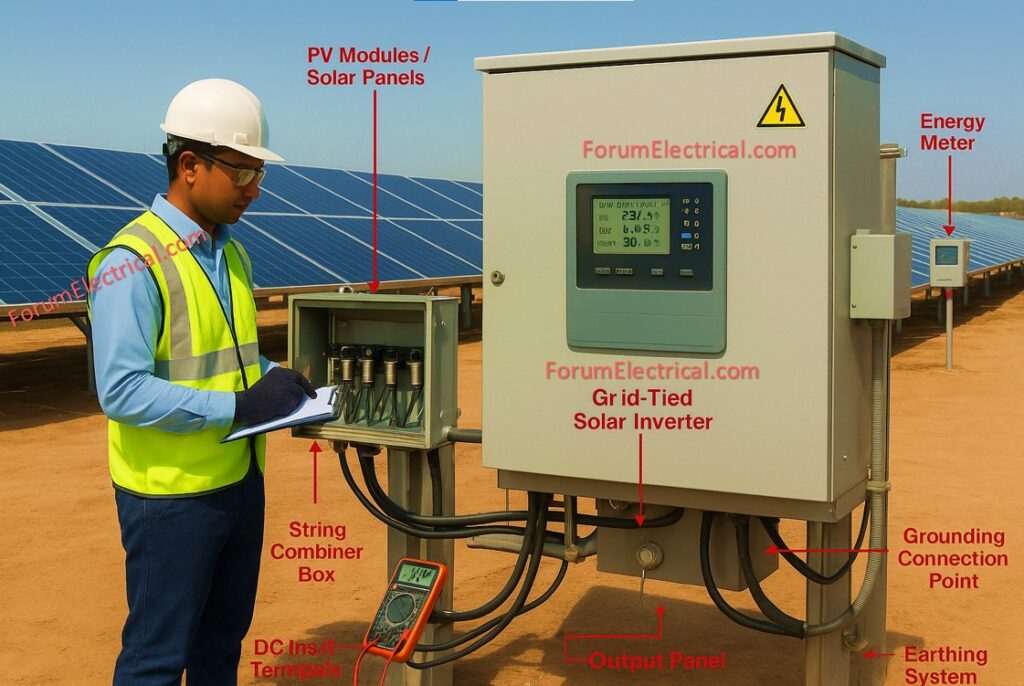
The Field Combiner Box (FCB) combines numerous string outputs while protecting circuits with fuses or breakers.
Procedure:
Turn off the inverter’s AC and DC isolators.
Use a multimeter to verify the lack of voltage.
After you have confirmed isolation, open the FCB cover.
Inspect the fuse holders, surge arrestors and terminals.
Tighten connections and remove dust with dry air.
Replace faulty fuses (or) SPD as necessary.
Before re-energizing, close the box and firmly lock it.
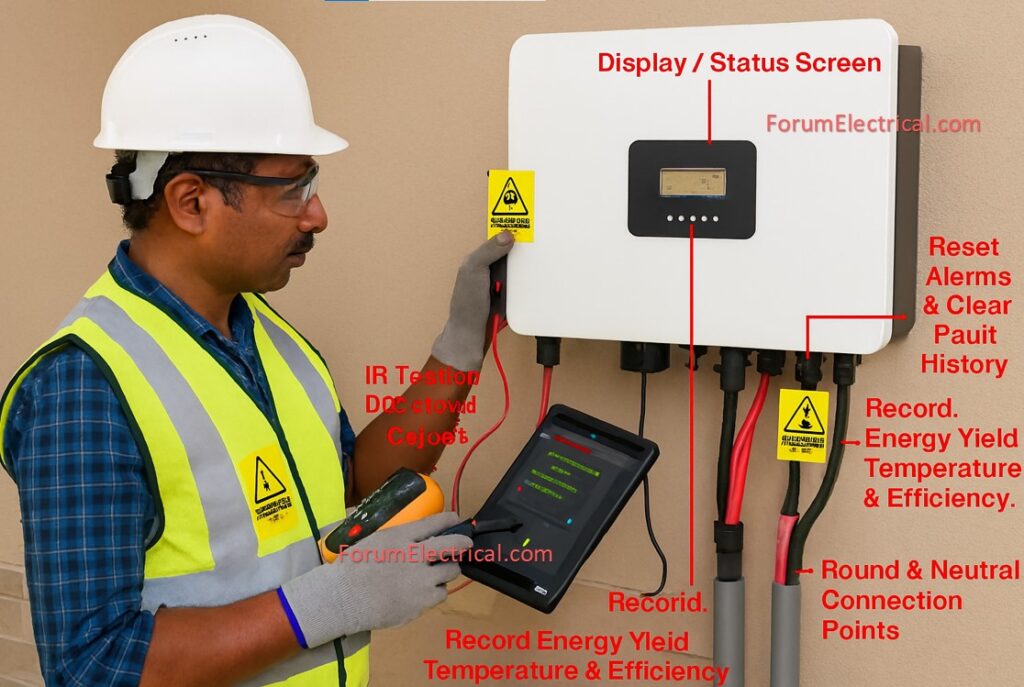
Inverter Service Procedure
Routine inverter service must adhere to manufacturer specifications and safety regulations.
Technicians should document all test results and compare them to the baseline data.
Checklist:
Visually examine for dust, insects (or) moisture infiltration.
Check inverter grounding & neutral connections.
Conduct an insulation resistance (IR) test on DC input cables.
Check synchronization with the grid voltage and frequency.
Maintain a record of total energy yield, temperature and efficiency parameters.
After completing corrective measures, reset alarms and delete the fault history.
Fortnightly O&M Procedure
Every two weeks deeper system inspections are carried out to ensure consistent performance.
Key Functions:
Check the tracker system’s operation (for solar tracking plants).
Use a clamp meter to verify string current measurements.
Inspect surge protection devices (SPD) & replace if defective.
If you notice any dust or bird droppings, clean the modules.
Record inverter yield & compare it to projected generation.
Monthly O&M Procedure
Monthly maintenance includes system testing, performance analytics & environmental condition monitoring.
Key Functions:
Check the calibration of the sun radiation and temperature sensors.
Test the insulation resistance of DC strings & AC feeders.
Clean the switchyard & inverter rooms.
Inspect the cable terminations at the LT/HT panels & transformer bushings.
Maintain a record of the transformer oil level, silica gel color & temperature rise.
Download SCADA data logs & investigate trends.
Yearly O&M Procedure
The annual site inspection confirms compliance with performance guarantees & electrical safety requirements (IEC/IS).
Yearly Checklist:
Calibrate all measurement devices and sensors.
Perform thermographic scanning on panels, cables and joints.
Conduct an earth resistance and continuity test.
Test the surge arrestors, relays & control panel operations.
Check grid synchronization & metering accuracy.
Prepare a complete annual performance report, including corrective measures.
Documentation
All O&M activities must be recorded in the PV plant logbook & confirmed by an O&M engineer.
Include energy generating data, maintenance checklists and equipment replacement records.
Conclusion
Regular operation and maintenance for photovoltaic plants improves efficiency, assures long-term reliability and reduces unscheduled shutdowns.
A well-structured maintenance plan reduces power loss maintaining consistent performance and maximizing return on investment (ROI).

