Calculator
🔧 UPS (Uninterruptible Power Supply) Calculator
Professional UPS Sizing for Data Centers & Critical Infrastructure
Click here for more Electrical Calculators
Power reliability is essential in the digital age. UPS systems protect your valuable equipment from power outages.
Understand UPS technology to ensure business continuity and protect sensitive electronic equipment from the power-related harm in a small office or large data center.
What is a UPS System?
A UPS (Uninterruptible Power Supply) is an electrical device that provides emergency power to the connected loads when the primary power source fails.
Unlike standby generators that require time to start UPS systems deliver instantaneous power through batteries ensuring zero downtime during power transitions.
Modern UPS systems do more than just provide backup power which they also condition incoming electricity protecting equipment from voltage fluctuations, surges and electrical noise that can degrade performance (or) cause catastrophic failures.
Key Components
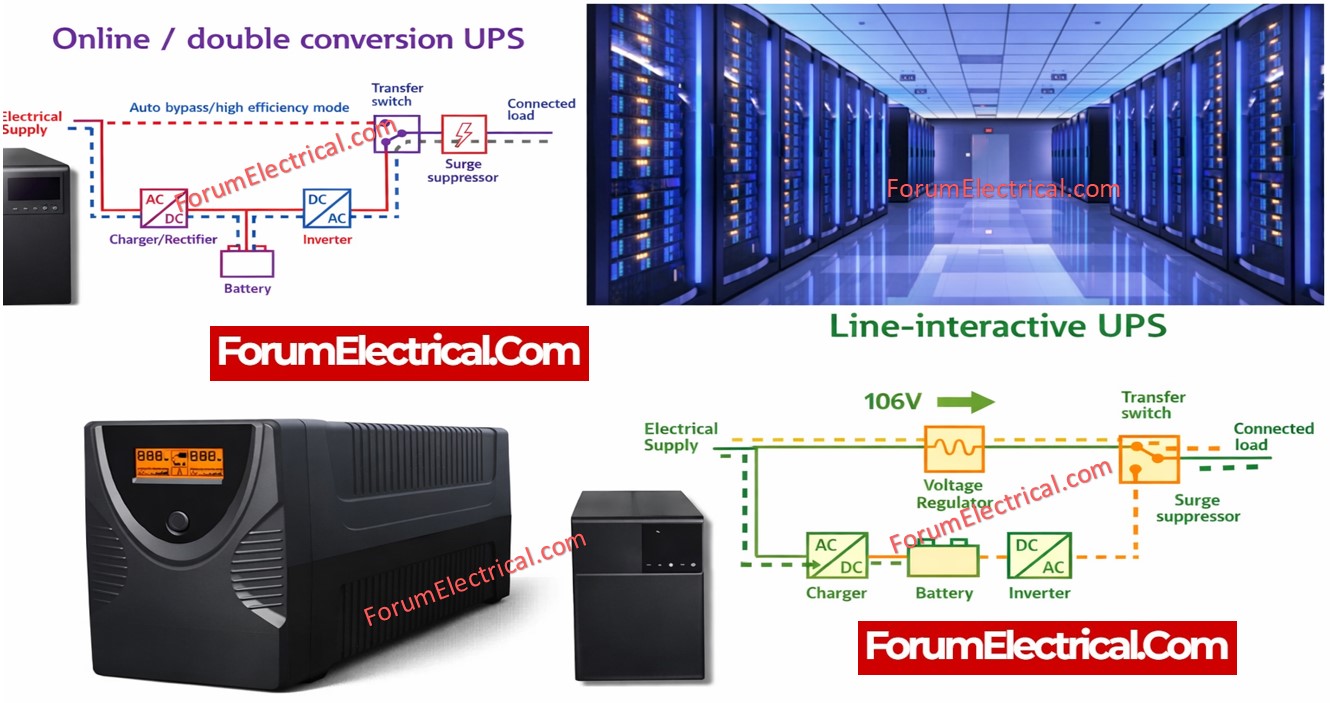
The heart of any UPS system consists of three primary components:
1). Rectifier,
2). Battery Bank and
3). Inverter.
Rectifier
The rectifier converts incoming AC power to DC charging the batteries while simultaneously powering the inverter.
Inverter
The inverter then converts DC back to clean AC power for the connected equipment.
This double-conversion process ensures that devices receive consistent, high-quality power regardless of input conditions.
Advanced UPS systems also incorporate bypass circuits allowing direct power flow during maintenance (or) if internal components fail.
Load Requirement
Proper UPS sizing requires careful analysis of the power requirements.
The average load represents typical consumption during normal operations while peak load accounts for the maximum demand during intensive activities like server startups (or) heavy computational tasks.
Load Variation
Load variation is the fluctuation between these states significantly impacts UPS performance and longevity.
Power Factor
Power factor typically ranging from 0.8 to 1.0 describes the relationship between real power (kW) and apparent power (kVA) essential for the accurate capacity calculations.
Redundancy Strategies
Essential applications demand redundancy planning.
An N configuration provides basic protection with no backup capacity. N+1 redundancy adds one additional UPS module beyond minimum requirements ensuring continued operation if one unit fails.
The 2N approach doubles the entire system creating completely independent power paths for maximum reliability.
Each strategy balances cost against risk tolerance and uptime requirements.
Thermal & Battery Considerations
Dynamic loading patterns create thermal stress within UPS components.
Frequent transitions between light and heavy loads generate heat cycles that accelerate component aging.
Understanding the thermal stress factor helps to predict maintenance needs and component lifespan.
Battery discharge characteristics also vary with the load intensity higher peak-to-average ratios cause deeper discharge cycles potentially reducing battery life and requiring more frequent replacements.
Conclusion
A UPS system must balance capacity, load, redundancy and operating restrictions.
The UPS Calculator simplifies this complex study and provides professional data center and essential infrastructure sizing recommendations.
Understanding these essential concepts and using the right calculating tools can help firms preserve their technological infrastructure investments, reduce downtime risks and provide reliable power protection.
In an increasingly power-dependent world UPS planning ensures business continuity as well as power interruption prevention.

