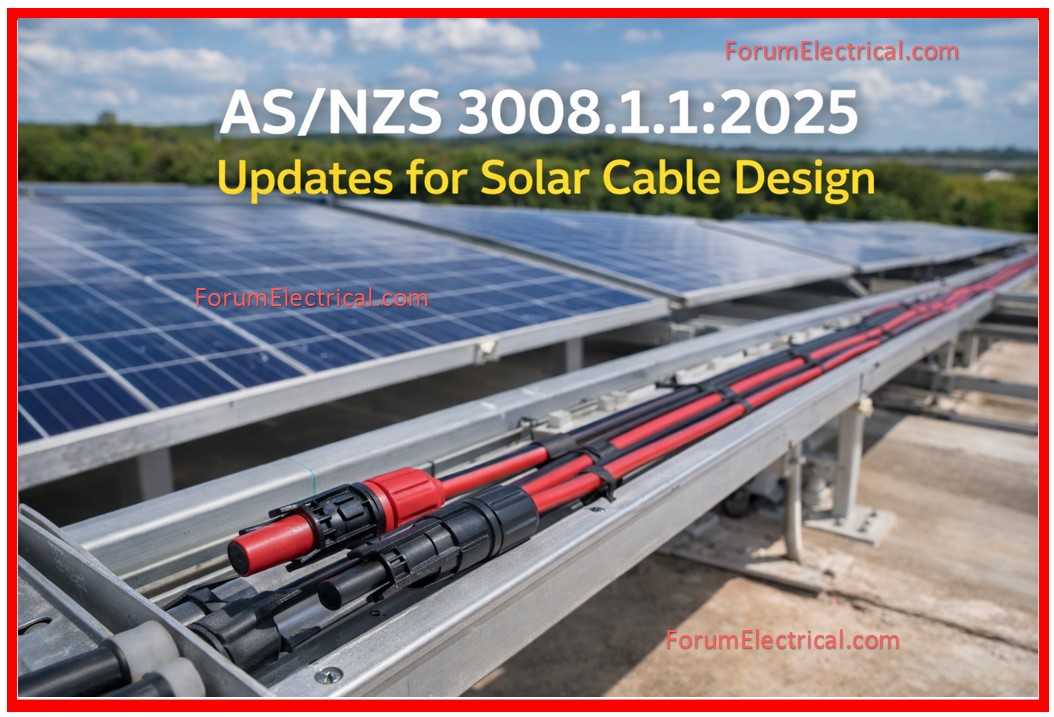
The 2025 edition introduces dedicated DC cable sizing tables specifically for solar PV systems which eliminates the earlier practice of adapting AC tables for DC applications.
This update improves the accuracy in cable selection for photovoltaic (PV) systems by directly addressing DC operating conditions.
Support for High Voltage Solar Systems (Up to 1500V DC)
The standard that is fully supports high voltage (HV) solar installations up to 1500V DC that are commonly utilized in modern utility scale solar plants.
This ensures that cable design aligns with any current industry practices and enhances the system efficiency by reducing current and losses.
Derating Factors
The updated standard provides a more refined grouping and derating factors for cables installed in bundles, conduits (or) trays.
These revisions allow engineers to more accurately account for heat buildup in solar installations particularly in rooftop and densely packed cable systems.
Updated Soil Thermal Resistivity Values
The standard includes a revised soil thermal resistivity values for an underground cable installations and maintenance that improves the accuracy of current-carrying capacity calculations.
This is used to assures a safer & more reliable cable sizing for the buried solar cables under varying soil conditions.
Improved Current Carrying Capacity (CCC) Calculations
The 2025 update enhances the methodology for determining current carrying capacity (CCC) by incorporating more realistic environmental & installation factors.
This assists engineers to select cables that operate efficiently without any overheating.
Voltage Drop Calculation Methods
The revised standard provides more accurate voltage drop calculation methods that are essential for long DC cable runs in solar farms (solar power plant).
This helps to minimize the energy losses and ensures an optimal system performance.
Better Alignment with Solar PV Standards
The updated version aligns more closely with the AS/NZS 5033 (Solar PV installation standard) that is ensuring consistency in design, installation & safety requirements across the solar projects.
Improved Thermal Performance Considerations
Additional guidance is provided for thermal effects due to ambient temperature, solar radiation and installation conditions that is essential for outdoor solar installations exposed to high temperatures.
Increased Design Accuracy and Safety
Overall the changes improve design accuracy, system reliability and safety compliance reducing the risk of
- Cable overheating,
- Insulation failure and
- Energy losses.
The AS/NZS 3008.1.1:2025 update represents a major improvement in solar cable design by introducing
- Dedicated DC standards,
- Improved derating factors and
- Enhanced calculation methods
ensuring that advanced and modern solar installations that are efficient, safe and compliant with the current standards and regulations.

