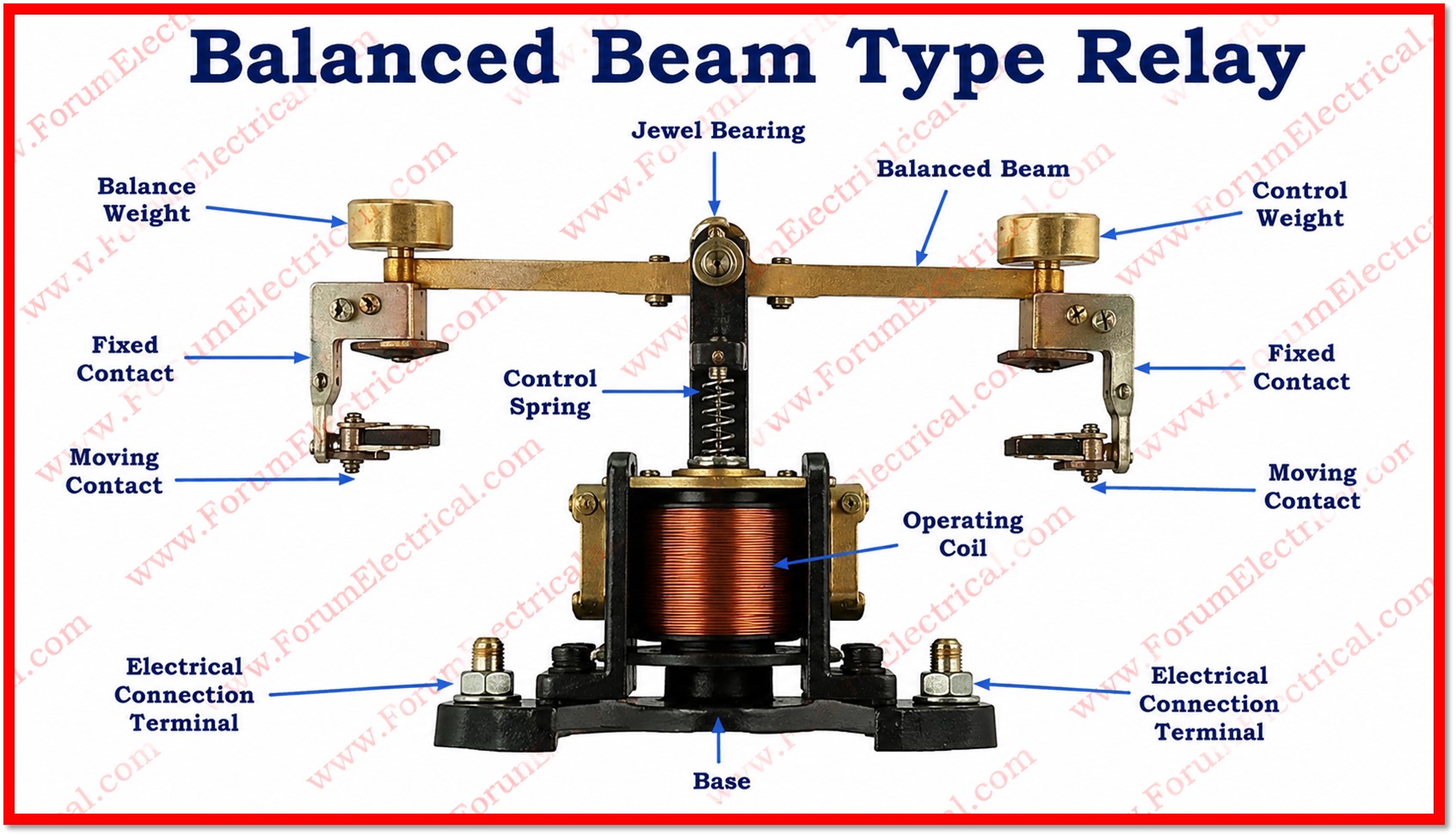
What is Balanced Beam Type Relay?
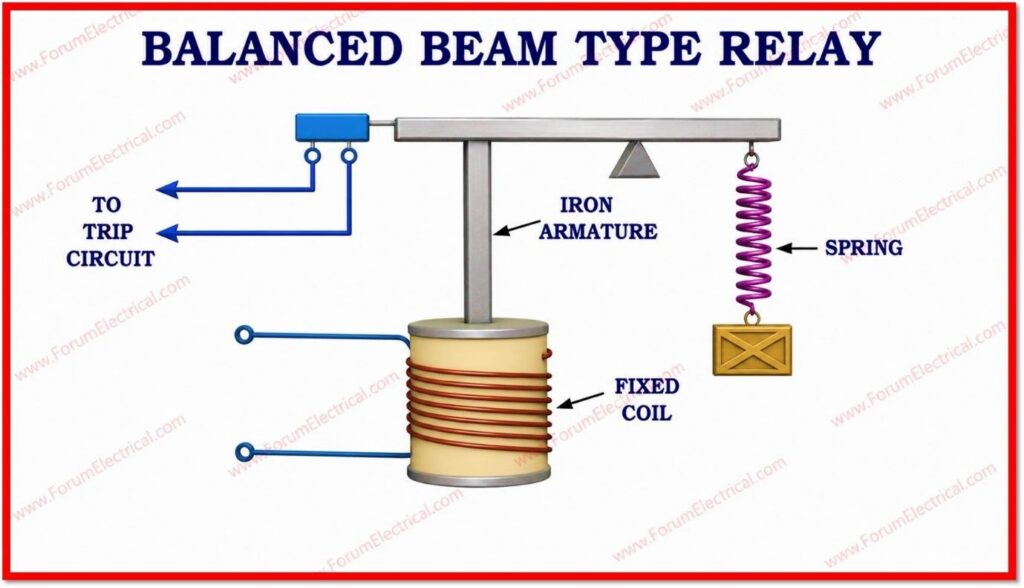
In contrast to an attraction armature type relay, a balanced beam type relay employs two electromagnets at each end of a beam. The first magnetic generates operating torque, while the other magnetic provides retraining torque. The beam is placed in the center and usually remains horizontal.
Construction of Balanced Beam Relay
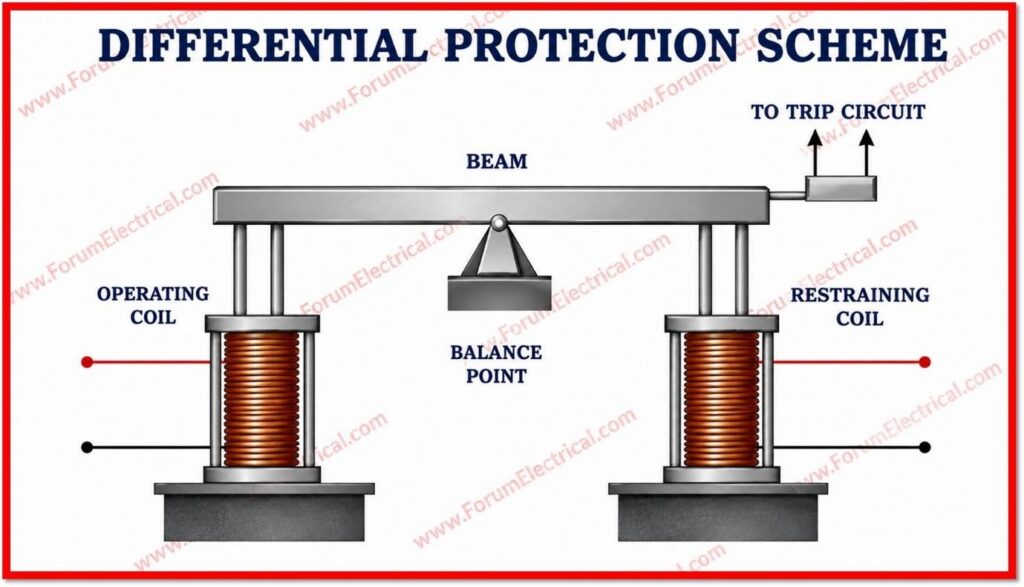
A balanced beam relay operates according to the formation hypothesis. A single hinge supports one beam. As a result, two forces act on either end of the beam. Both forces are moving in parallel. Under normal operating conditions, the torque created by the forces in respect to the hinge is equal in both direction & magnitude.
These torques includes
• Operational Torque and
• Restricting torque.
Working Principle of Balanced Beam Relay
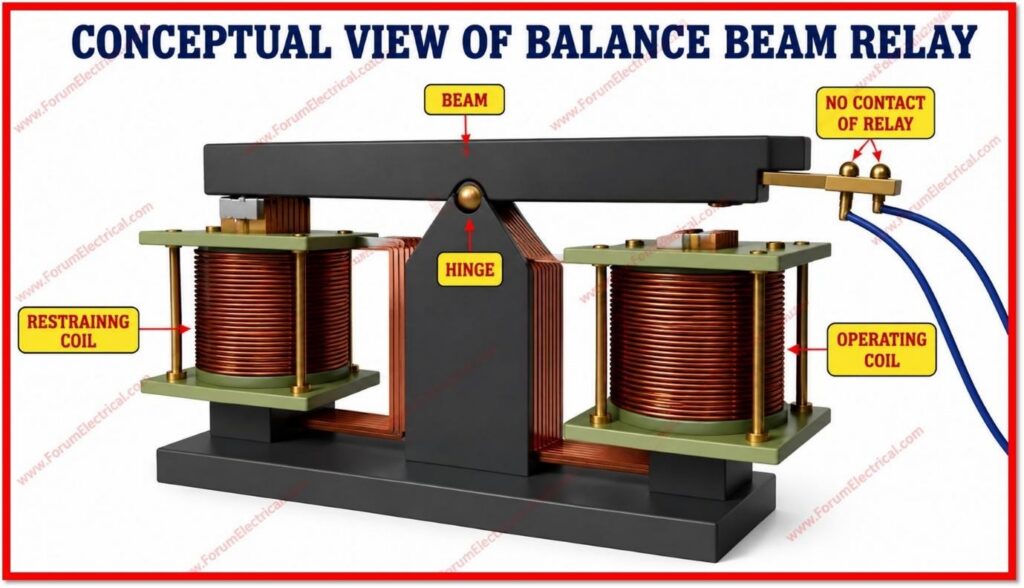
Both
• The restraining coil
• The restraining spring
generates the necessary torque.
This type of relay makes use of an attracted armature.
When a failure occurs, the running coil’s current exceeds its pick-up value, increasing it. This enhanced magnetic field leads the coil to draw in the beam end, creating torque at the proper end of the beam.
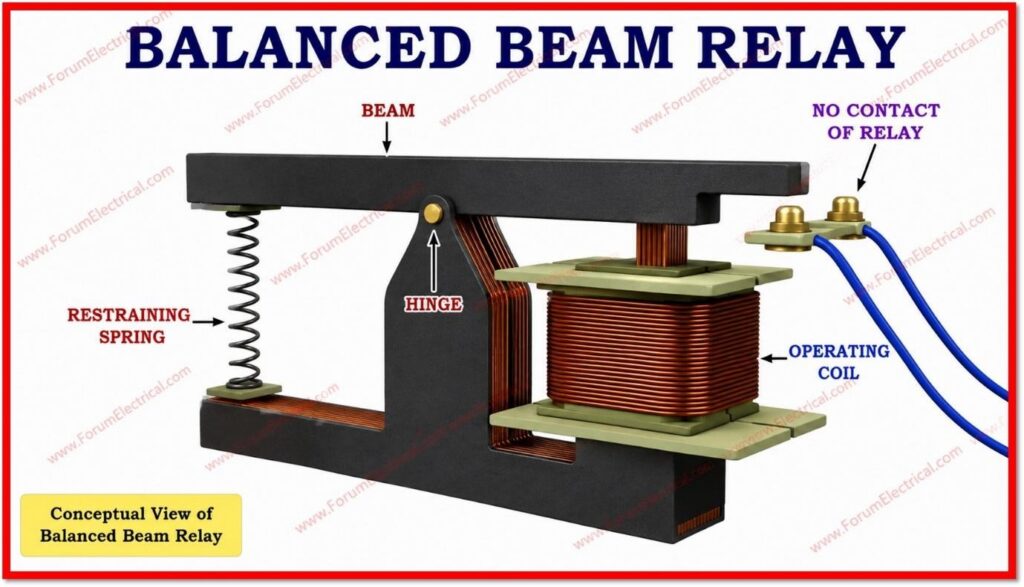
As the torque increases, the balance of the beam is upset, and the beam end coinciding with the operational torque moves downwards to close the relay’s NO contacts as a result of the imbalanced torque condition.
This causes the trip circuit to be shut off. As a consequence, the circuit breaker activates, isolating the damaged circuit.
Advantages of Balanced Beam Relay
• The Balanced Beam Relay are reliable.
• The Balanced Beam Relay performs efficiently.
Disadvantages of Balanced Beam Relay
• Poor resetting to operate ratio.
• Sensitivity to phase shift between two electrodes.
• Balancing beam relays have considerable disadvantages, including improper operation under DC transients.
Application of Balanced Beam Relay
Balanced beam relays are widely regarded as different relay types due to their employment in a variety of applications.
In differential and also used balanced beam relays for distance protection.

