
GIS Testing
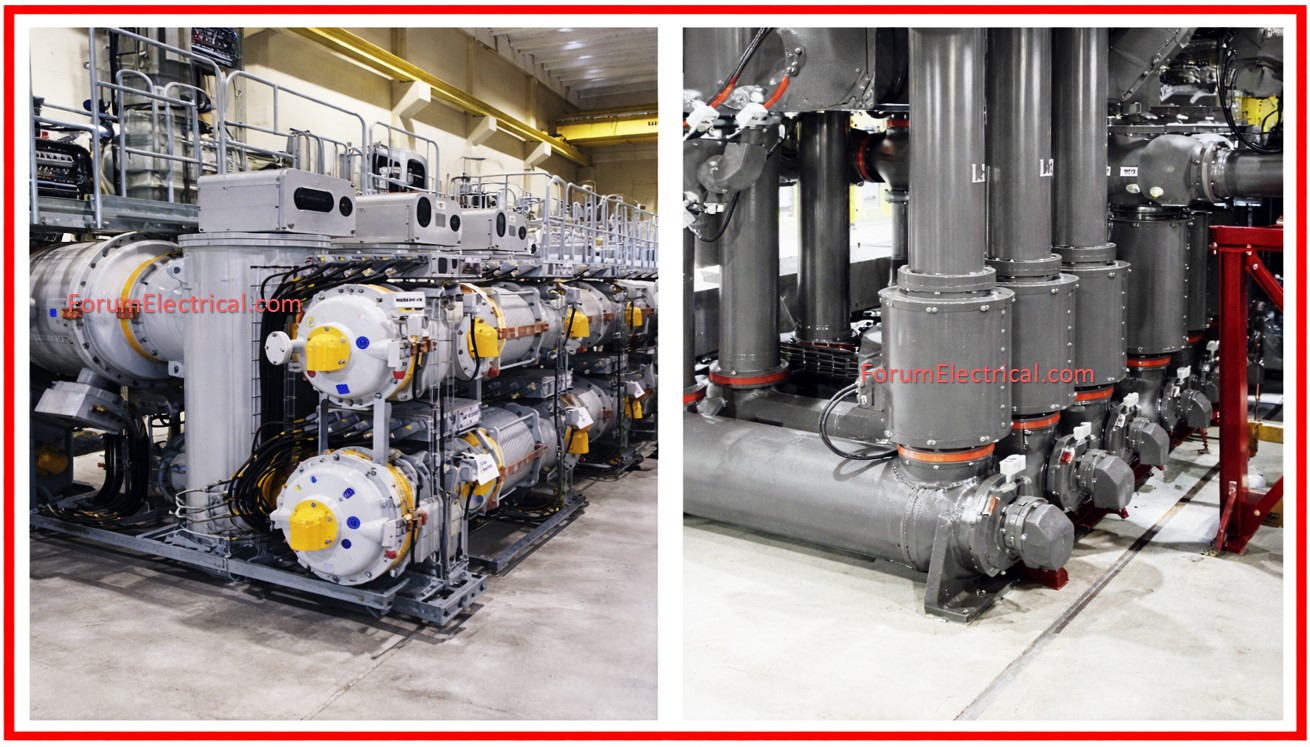
Electrical testing of (GIS) Gas Insulated Switchgear is essential for ensuring operational safety, dielectric integrity, dependability and conformity with international standards.
- GIS Testing
- Standards
- 1). Power Frequency Withstand Test
- 2). Partial Discharge (PD) Test
- 3). Dielectric (Insulation Resistance) Test
- 4). High Voltage DC Test (For Cables Only)
- 5). Circuit Breaker Timing Test
- 6). Contact Resistance Measurement
- 7). CT & VT Testing
- 8). SF₆ Gas Leakage Test
- 9). Functional & Interlock Tests
- 10). GIS Earthing Continuity Test
- 11). Low Frequency (VLF) Test
- Summary
Testing is typically carried out during:
• Factory Acceptance Testing (FAT),
• Site Acceptance Testing (SAT),
• Commissioning and
• Periodic Maintenance.
Standards
The primary applicable standards include:
• IEC 62271-203,
• IEC 60270,
• IEC 62271-100 and
• IEEE C37.122.
1). Power Frequency Withstand Test
Purpose
Power frequency withstand test is to verify the dielectric strength of GIS insulation under normal system frequency (50/60 Hz).
Test Voltage
Typically 1.5 to 2.0 times the rated voltage.
Duration
Usually 1 minute.
Reference Standard
IEC 62271-203
This confirms that the GIS insulation system can withstand the overvoltage conditions without any breakdown or failure.
2). Partial Discharge (PD) Test
Purpose
Partial discharge (PD) test is to detect internal defects such as:
• Voids in insulation
• Loose metallic particles
• Surface contamination
• Insulation degradation
Applied Voltage
At (or) slightly above operating voltage.
Typical Acceptance Level
Less than 5 pC
Detection Methods
• Coupling capacitors
• UHF sensors
• Acoustic emission sensors
Reference Standard
IEC 60270
PD testing is one of the most important diagnostics for the GIS condition assessment.
3). Dielectric (Insulation Resistance) Test
Purpose
Dielectric (insulation resistance) test to measure insulation resistance (IR) of GIS components.
Instrument Used
5 kV (or) 10 kV Megger (Insulation Resistance Tester)
Acceptance Value
Typically >1000 MΩ
Measurement Points
• Phase to ground
• Phase to phase
It is across open breaker contacts.
This test helps to detect moisture ingress (or) insulation deterioration.
4). High Voltage DC Test (For Cables Only)
Purpose
DC testing is generally not applied to GIS internal insulation but may be used for connected power cables.
Voltage Level
Typically 2–3 times rated DC voltage
Duration
15–60 minutes
It is not recommended for GIS compartments filled with SF₆.
5). Circuit Breaker Timing Test
Purpose
Circuit breaker timing test is to verify the operating sequence and timing of breaker contacts.
Tests Performed
• Open operation
• Close operation
• Open-Close (O-C)
• Trip-Free operation
Instrument
Breaker timing analyzer (e.g: Omicron CMC)
Typical Criteria
Opening/closing time within manufacturer specifications (commonly 30–60 ms).
It ensures a proper protection coordination and fault interruption performance.
6). Contact Resistance Measurement
Purpose
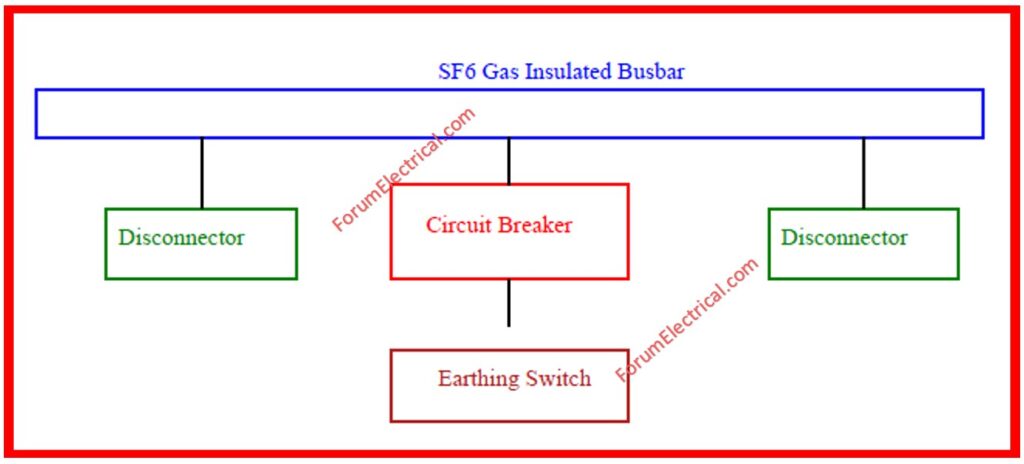
Contact resistance measurement is to measure resistance across closed contacts of:
• Circuit breakers,
• Disconnectors and
• Earthing switches.
Instrument
Micro-ohmmeter (200 A or higher)
Typical Acceptance Value
• Less than 100 µΩ
Reference Standard
IEC 62271-100
The low resistance ensures a minimal heating and energy losses.
7). CT & VT Testing
Testing of instrument transformers (current transformer and voltage transformer) installed within GIS includes:
Ratio Test
Ratio test verifies the correct transformation ratio.
Polarity Test
It ensures a correct phase relationship.
Excitation Test (CT only)
It identifies a saturation characteristics.
Burden/Impedance Test
It confirms compatibility with connected protection relays and meters.
8). SF₆ Gas Leakage Test
Purpose
SF₆ gas leakage test is to ensure gas tightness of GIS compartments.
Tool Used
SF₆ gas leak detector (sniffer)
Typical Acceptance Criteria
Leakage rate < 0.5% per year
Reference Standard
IEC 60068-2-17
Maintaining gas integrity is critical for dielectric strength and environmental compliance.
9). Functional & Interlock Tests
Purpose
Functional & interlock tests is to verify the proper operation of:
• Mechanical interlocks,
• Electrical interlocks,
• Safety blocking systems &
• Control logic via SCADA
Testing is performed using the simulated operating commands.
It ensures a safe switching sequences and prevents operator error.
10). GIS Earthing Continuity Test
Purpose
GIS earthing continuity test is to verify all metallic enclosures are properly connected to the earth grid.
Instrument
• Low-resistance ohmmeter
Acceptance Value
Typically less than 1 Ω
It is essential for the personnel safety and fault current dissipation.
11). Low Frequency (VLF) Test
Purpose
Low frequency (VLF) test is used to provide effective insulation assessment at reduced frequency with lower test power requirements.
Application
It is used primarily for connected XLPE cables not GIS internal insulation.
Summary
Electrical testing of GIS in high voltage (HV) substations ensures:
• Dielectric integrity,
• Mechanical reliability,
• Safe operation,
• Environmental compliance and
• Standard adherence.
Proper testing during FAT, SAT, commissioning and maintenance significantly reduces the failure risk and extends equipment life.