What is Factory Acceptance Testing (FAT)?
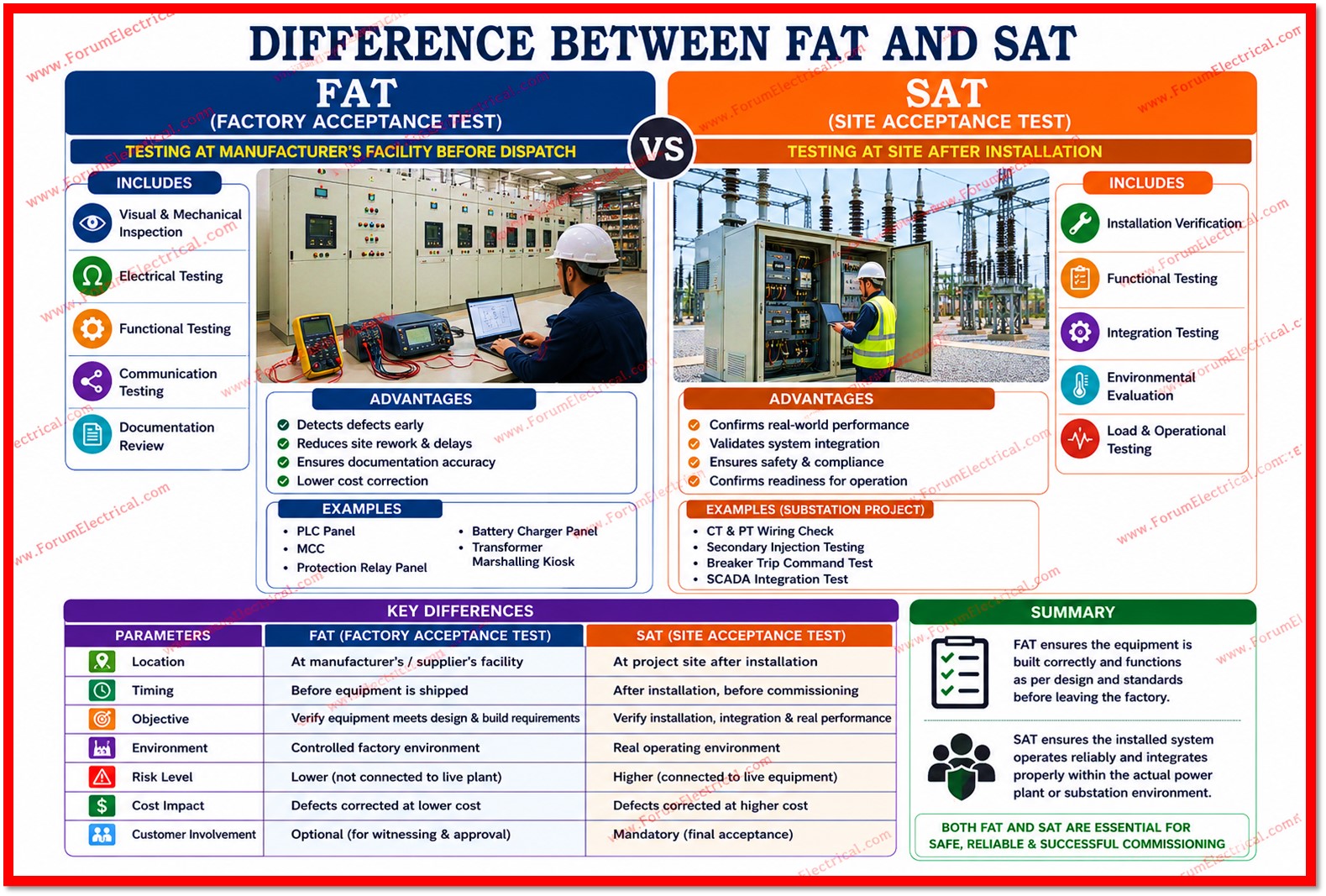
Factory Acceptance Test (FAT) is conducted at the manufacturers (or) suppliers facility prior to the equipment is shipped to the customer.
It ensures that the system is manufactured according to approved technical drawings, technical specifications and contractual requirements.
- What is Factory Acceptance Testing (FAT)?
- Purpose
- What includes FAT?
- Advantages of FAT
- FAT Example (Electrical Field)
- Practical Example (Substation Project)
- Who performs FAT?
- What is Site Acceptance Test (SAT)?
- Purpose
- What includes SAT?
- Who performs SAT?
- Advantages of SAT
- Practical Example (Substation Project)
- Differences between FAT and SAT
- Summary
Purpose
The primary purpose of the FAT is to verify that the equipment functions are correct before the equipment dispatch.
It helps to detect
• Manufacturing defects,
• Wiring mistakes,
• Configuration errors and
• Logic faults in a controlled environment.
Identifying the issues at this stage significantly reduces costly rework at the project site.
What includes FAT?
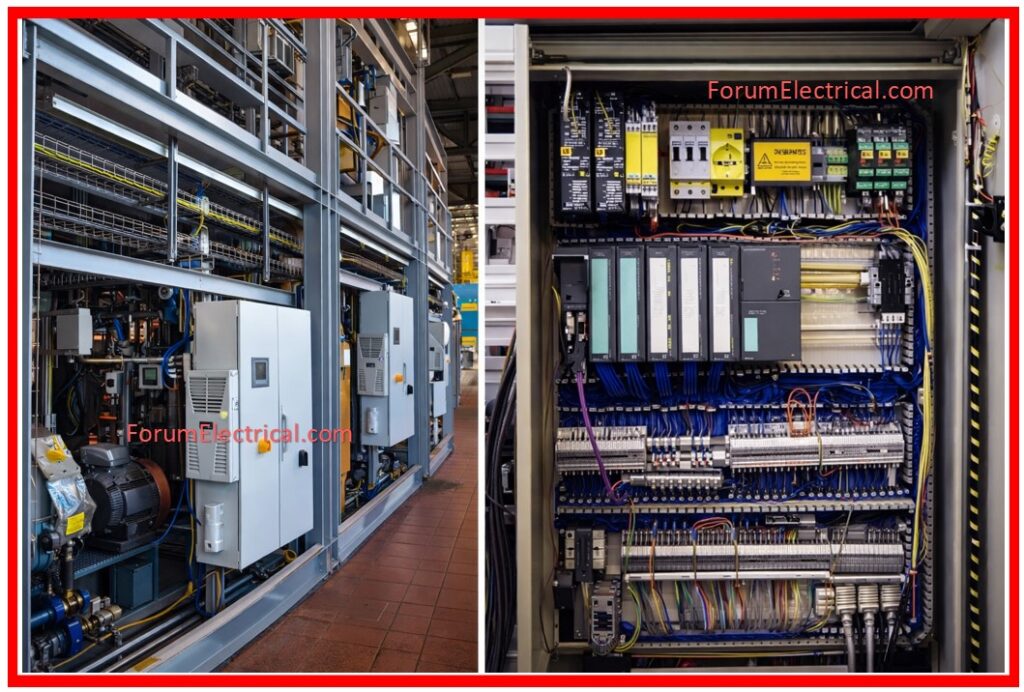
FAT includes a detailed visual and mechanical inspection to confirm correct component installation, proper labeling & adherence to design drawings.
Electrical testing such as
• Insulation resistance testing,
• Continuity checks and
• Verification of control wiring is performed to ensure safety and compliance.
Functional testing forms a major part of FAT.
• PLC logic is verified as per the cause-and-effect matrix,
• Protection relay settings are checked,
• Interlocks are tested,
• Alarms are validated and
• HMI screens are reviewed.
Simulated input and output signals are applied to confirm proper response of digital and analog circuits.
Communication protocols like Modbus (or) Ethernet are tested to ensure the proper configuration.
Documentation review (report) is also included in FAT.
As it is necessary in built drawings, wiring diagrams, calibration certificates and test reports are checked and approved before shipment.
Advantages of FAT
• Factory Acceptance Testing (FAT) helps to identify the manufacturing defects, wiring errors, configuration mistakes & logic issues at an early stage prior to the equipment is dispatched to the project site.
• By resolving the technical problems in the factory itself FAT minimizes unexpected issues during the site installation and commissioning thereby reducing delays.
• FAT ensures that all drawings, wiring diagrams, test reports and calibration certificates are verified and updated as per the final built in condition which improving overall documentation quality.
• Since issues are corrected at the manufacturers facility, the cost and effort required for rework at the installation site are significantly reduced leading to the better project cost control.
FAT Example (Electrical Field)
• PLC panel for substation automation,
• Motor Control Center (MCC),
• Protection relay panel,
• Battery charger panel and
• Transformer marshalling kiosk.
Practical Example (Substation Project)
For a 110 kV substation control panel
FAT includes
• During the Factory Acceptance Test (FAT) the protection relay configuration is verified to ensure that all settings comply with the approved protection philosophy and coordination study.
• Trip signals are simulated to confirm that the relays, PLC and associated control circuits respond correctly under any fault conditions.
• The annunciation logic is tested to ensure that alarms, indications and alert messages that operate accurately as per the cause and effect matrix.
• PLC interlocks are verified to confirm correct sequencing, safety logic and prevention of incorrect (or) unsafe operations.
Who performs FAT?
FAT is generally carried out by the vendor (or) manufacturer.
In many projects, the customer (or) third-party inspection agency witnesses the test to ensure compliance.
Since testing occurs in a factory-controlled environment, corrections are easier and more economical.
What is Site Acceptance Test (SAT)?
Site Acceptance Test is conducted at the final installation site after the equipment has been delivered, installed and connected to the plant (or) substation systems.
It verifies performance under actual operating conditions.
Purpose
The purpose of SAT is to ensure that the system works properly in its real environment and integrates seamlessly with other plant equipment.
It confirms that installation has been completed correctly and that the system performs reliably when energized.
What includes SAT?
SAT starts with installation verification including
• Cable termination checks,
• Earthing confirmation,
• Power supply verification and
• Phase sequence validation.
After ensuring the proper installation the system is energized and tested under the live conditions.
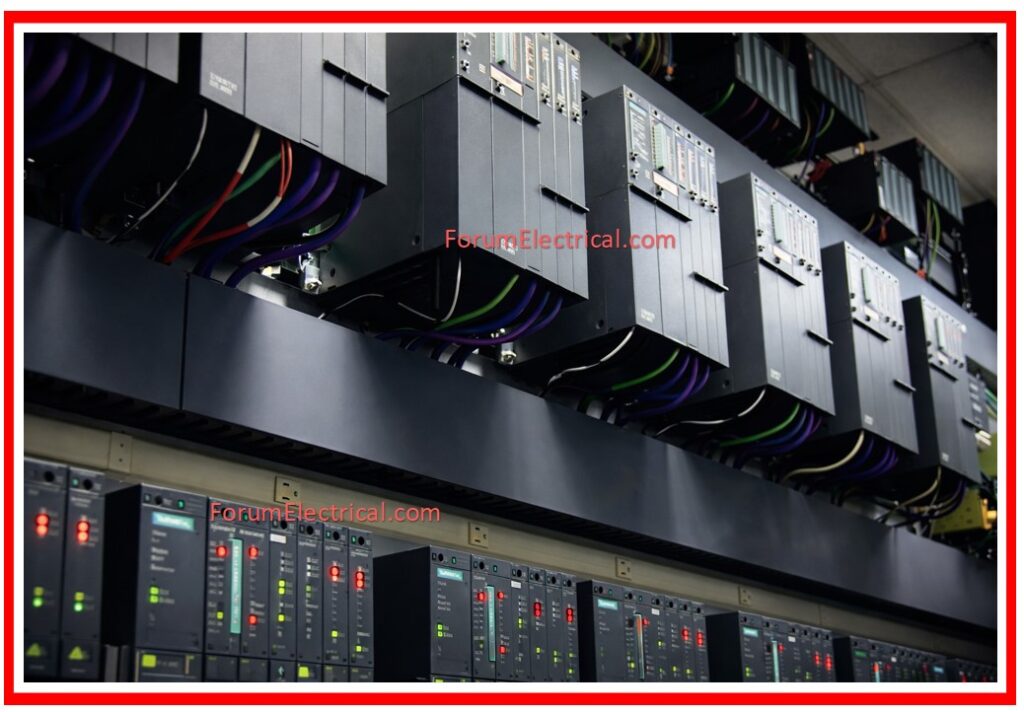
Functional tests are performed during FAT are repeated during SAT to confirm the steady consistent performance.
Integration testing is conducted to verify the communication with
• SCADA systems,
• Field instruments,
• Protection relays and
• Other interconnected equipment.
Environmental factors such as temperature, humidity and network conditions are evaluated to ensure the stable operation.
Load testing and real time operational checks are also performed to confirm that the system responds correctly during normal (routine) and abnormal (fault/failure) conditions.
Who performs SAT?
SAT is usually performed by the customer (or) end-user often supported by vendor commissioning engineers.
Since testing occurs in a live operational environment, safety precautions are essential and the level of risk is higher compared to FAT.
Advantages of SAT
• Site Acceptance Testing confirms that the control panel and associated systems operate correctly under the real-world operating conditions.
• It validates a proper integration between the control panel, primary equipment, protection relays & auxiliary systems.
• SAT ensures that site safety requirements and statutory standards are met during the live operation.
• Successful completion of SAT confirms the client acceptance and readiness of the system for the commissioning and commercial operation.
Practical Example (Substation Project)
For a 110 kV substation control panel
SAT includes
• During Site Acceptance Testing (SAT) CT & PT wiring is confirmed to ensure correct polarity, ratio and phase alignment with proper protection and metering circuits.
• Secondary injection testing is performed to verify the protection relay operation (overload & overcurrent), pickup values, timing test & tripping accuracy under any simulated fault conditions.
• Breaker trip commands are verified to ensure that the protection relays (overload & overcurrent) and control logic correctly operate the circuit breaker (CB) during fault (or) manual trip conditions.
• SCADA integration is tested to confirm the reliable communication, correct status indications, control commands, alarms and alert reporting between the substation and the control center.
Differences between FAT and SAT
The difference between FAT and SAT are
| Parameters | FAT (Factory Acceptance Test) | SAT (Site Acceptance Test) |
|---|---|---|
| Location | FAT is conducted at the manufacturers (or) suppliers facility where the equipment is assembled and tested before dispatch. | SAT is conducted at the project site after the equipment has been delivered and installed. |
| Timing | FAT takes place before the equipment is shipped to the customer. | SAT takes place after installation and prior to the final commissioning. |
| Objective | The objective of FAT is to verify that the equipment meets approved design specifications and build quality requirements. | The objective of SAT is to verify correct installation, system integration, and operational performance in real conditions. |
| Environment | FAT is performed in a controlled factory environment without exposure to actual plant conditions. | SAT is performed in the real operating environment where the system interacts with live equipment and field conditions. |
| Risk Level | The risk level during FAT is relatively lower because the system is not connected to the live plant operations. | The risk level during SAT is higher since the system may be energized & connected to live equipment. |
| Cost Impact | Any defects that are identified during FAT can usually be corrected at a lower cost before shipment. | Defects identified during SAT may involve a higher correction costs due to the site constraints and integration complexity. |
| Customer Involvement | Customer involvement during FAT is optional but often recommended for the witnessing and approval. | Customer involvement during SAT is mandatory as it confirms the final acceptance and readiness for operation. |
Summary
FAT and SAT are complementary testing procedures in the electrical and automation projects.
FAT ensures that the equipment is built correctly and functions as per design and standards before leaving the factory.
SAT ensures that the installed system which operates reliably and integrates properly within the actual power plant (or) substation environment.
Both stages are essential for reducing the delays, improving safety, ensuring compliance and attaining successful commissioning of the electrical and control systems.

